
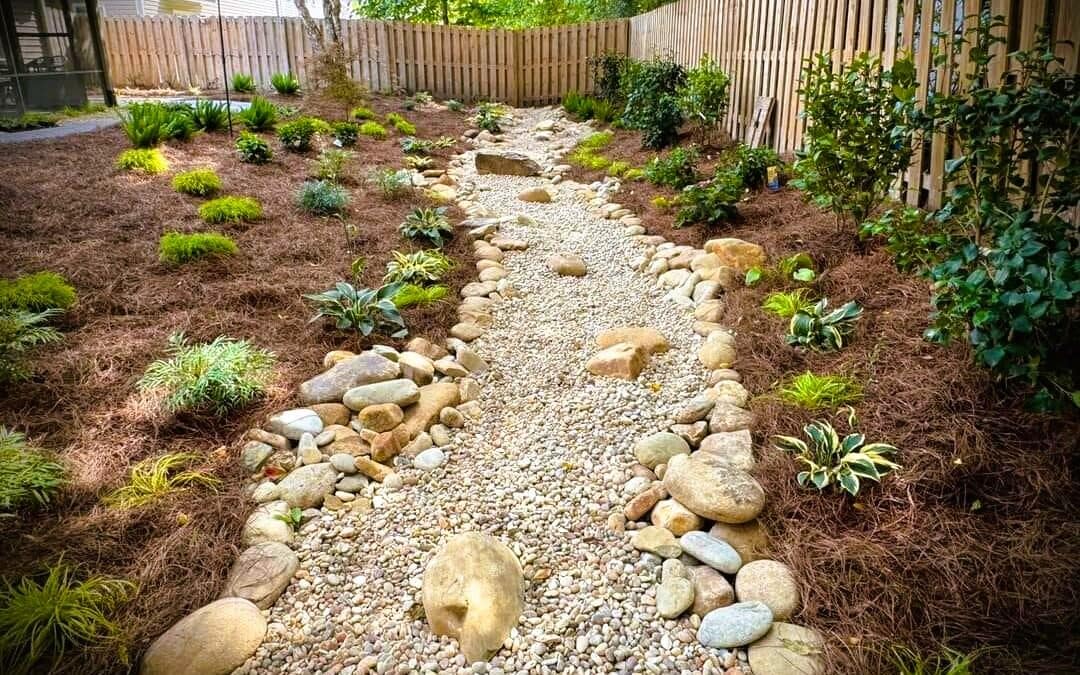

Camellia Creek Landscape specializes in creating stunning, functional outdoor spaces with expert design and craftsmanship. With a passion for detail and a commitment to quality, every project is thoughtfully designed to enhance both beauty and usability. From lush gardens to custom hardscapes, they bring visions to life with creativity and care.
Extreme heat, flooding rain, powerful wind, drought, and sudden freezes can place heavy stress on lawns, trees, garden beds, and outdoor structures. Ten landscaping ideas to help protect a yard from extreme weather can reduce damage before the next difficult season arrives. Homeowners will find practical guidance covering drainage, resilient plants, soil care, irrigation, erosion control, and seasonal inspections. A professional landscaper can connect these separate improvements through a plan that fits the property rather than relying on scattered repairs.
- Identify the yard’s greatest weather risks.
- Address water movement before cosmetic upgrades.
- Choose plants according to site conditions.
Weather Resistant Yard Ideas
Weather protection works best when every choice supports the yard as a whole. A professional landscaper may encounter a home where runoff crosses a bare slope, collects beside a patio, and weakens nearby shrubs, then correct the trouble through grading, ground cover, and redirected drainage instead of treating each symptom alone. That kind of field experience shows why thoughtful placement matters. Small changes can prevent expensive losses.
- Study how rain travels across the property.
- Check which plants struggle after storms.
- Look for exposed roots and washed soil.
1. Improve Yard Drainage
Poor drainage can leave standing water around plants, patios, walkways, and foundations while carrying valuable topsoil toward streets or lower sections of the property. A professional landscaper can inspect the slope, identify compacted areas, and recommend swales, French drains, catch basins, channel drains, or grading corrections where they make sense. Water should move through a planned route without being pushed onto neighboring land. Drainage comes first.
- Watch the yard during steady rainfall.
- Mark puddles that remain after the storm.
- Keep discharge points away from structures.

2. Choose Storm Tolerant Plants
Plants selected only for color or price may fail when exposed to high wind, saturated soil, dry spells, or intense sunshine. A professional landscaper considers mature size, branch structure, root habits, sunlight, moisture needs, and expected weather exposure before recommending a species. Trees with weak branch unions should not sit beside roofs, vehicles, or utility lines, and moisture-loving shrubs should not be placed on dry rises. Placement shapes survival.
- Match each plant to its growing conditions.
- Leave room for mature branches and roots.
- Avoid fragile specimens near valuable property.
3. Plant Native Species
Native plants have developed within regional soils, rainfall patterns, temperatures, and seasonal cycles, which often makes them sensible choices for demanding landscapes. Established native species may need less supplemental watering than plants adapted to another climate, though every new planting still requires care while roots develop. A professional landscaper can select native trees, grasses, shrubs, and flowers for separate moisture zones across the yard. Native vegetation can also provide food and shelter for local wildlife.
- Select species suited to the site’s rainfall.
- Group plants with similar water needs.
- Confirm expected height and spread before planting.
4. Build Healthier Soil
Healthy soil allows rainfall to enter the ground, holds moisture for plant roots, and reduces the amount of water flowing across the surface. The Natural Resources Conservation Service reports that functioning soils absorb and retain more water, making them less susceptible to runoff and erosion. A professional landscaper may recommend soil testing, compost, aeration, or carefully chosen amendments after checking texture and compaction. Guessing can create new problems.
- Test soil before applying fertilizers.
- Add organic matter where testing supports it.
- Limit traffic across wet planting areas.
5. Apply Mulch Correctly
Mulch protects exposed soil from pounding rain, slows moisture loss during hot weather, and helps moderate temperature changes around shallow roots. The University of Minnesota Extension recommends a mulch depth of roughly two to four inches while keeping the material away from trunks and stems. A professional landscaper can choose shredded bark, wood chips, pine straw, or another material based on the bed and climate. Deep piles can trap excess moisture and restrict oxygen.
- Maintain an even mulch layer.
- Leave visible space around every trunk.
- Replace material after natural decomposition.

6. Create Living Windbreaks
Rows of trees and shrubs can slow wind before it reaches exposed patios, garden beds, or tender plants. Layered planting works better than a solid wall because air can pass through branches gradually rather than rising over a dense barrier and dropping with force on the other side. A professional landscaper can calculate spacing, mature height, utility clearance, and the direction of damaging winds. Windbreaks need room.
- Combine trees with lower shrubs.
- Keep large species clear of power lines.
- Account for mature canopy width.
7. Control Soil Erosion
Erosion often begins as a narrow wash below a downspout, along a slope, or beside a hard surface where concentrated water gains speed. Deep-rooted ground covers, terraces, retaining structures, stone channels, and erosion-control blankets can hold soil while plants become established. A professional landscaper should examine the source of moving water before covering the damaged area, because fresh soil alone may disappear during the next storm. The cause must be corrected.
- Inspect slopes after heavy rain.
- Extend downspouts toward stable drainage areas.
- Cover bare ground before severe weather.
8. Upgrade Landscape Irrigation
Irrigation should support plants during dry periods without saturating roots or sending water across pavement. The U.S. Environmental Protection Agency reports that outdoor watering represents more than 30 percent of average household water use and may reach 60 percent in arid regions. A professional landscaper can divide the system into plant-based zones, add drip lines, check pressure, and install weather-responsive controls. Precision saves water.
- Repair leaking valves and broken heads.
- Water beds separately from turf.
- Pause irrigation after measurable rainfall.
9. Reduce Lawn Areas
Large lawns can require frequent watering, mowing, fertilization, and repair when drought, flooding, or heat damages the grass. Selected sections may be replaced with native beds, shade gardens, ground covers, permeable paths, mulch, or gathering areas without removing every patch of turf. A professional landscaper can preserve grass where it serves a purpose and convert difficult corners where mowing or irrigation wastes resources. Strategic lawn care means fewer weak spots.
- Retain turf in play and recreation zones.
- Convert steep slopes into planted beds.
- Replace narrow strips that are hard to water.
10. Schedule Seasonal Inspections
Routine inspections can reveal cracked branches, blocked drains, leaning trees, exposed roots, clogged irrigation heads, and unstable retaining materials before bad weather arrives. A professional landscaper can review the property ahead of storm season, freezing temperatures, summer heat, or predicted drought and then rank repairs by urgency. Preventive work usually causes less disruption than emergency cleanup, and homeowners gain a clearer picture of how the yard is changing. Timing matters.
- Prune hazardous branches before windy periods.
- Clear leaves from drains and channels.
- Check newly planted trees for movement.

Slidell landscapers
Professional Landscaper Key Takeaways
A weather-ready yard depends on several connected systems rather than one isolated upgrade. Drainage directs excess rain, healthy soil accepts and stores water, mulch shields root zones, strong plants withstand local conditions, and properly adjusted irrigation supports growth during dry stretches. A professional landscaper can determine which concerns deserve attention first, especially when slopes, structures, large trees, or recurring flooding complicate the work. The strongest plan begins with observation.
- Correct drainage and erosion before replacing damaged plants.
- Base plant choices on soil, sunlight, moisture, and exposure.
- Use mulch and organic matter to protect root zones.
- Adjust irrigation according to rainfall and plant needs.
- Inspect the yard before each severe weather season.
Common Landscaping Questions
Can Landscaping Prevent Flooding?
Landscaping cannot stop every flood, especially when rainfall exceeds the capacity of public drainage systems or nearby waterways. Grading, swales, rain gardens, permeable surfaces, and suitable drains can still reduce ordinary ponding and redirect runoff away from vulnerable sections. A professional landscaper should inspect persistent flooding before recommending a solution.
Which Plants Handle Storms?
Storm tolerance depends on local climate, soil drainage, wind exposure, root structure, and the health of each specimen. Native species and plants adapted to regional conditions often perform well, but no plant is immune to extreme weather. Homeowners should select species after considering the exact planting site.
Does Mulch Prevent Damage?
Mulch reduces soil erosion, slows evaporation, limits temperature swings, and protects surface roots from weather stress. Excessive mulch can keep trunks wet, encourage decay, and reduce airflow through the soil. An even layer kept away from stems provides the safest protection.
When Should Drainage Be Checked?
Drainage should be observed during rain and reviewed again after the weather clears. Puddles that remain for long periods, washed mulch, exposed soil, wet foundations, or dying plants may signal a larger problem. A professional landscaper can trace where the water begins and where it should be directed.
How Often Are Inspections Needed?
Most homeowners benefit from checking the yard at least once each season and after major storms. Properties with mature trees, steep grades, recurring standing water, or aging drainage systems may need closer attention. Regular observations help catch small changes before they become costly repairs.