

Camellia Creek Landscape specializes in creating stunning, functional outdoor spaces with expert design and craftsmanship. With a passion for detail and a commitment to quality, every project is thoughtfully designed to enhance both beauty and usability. From lush gardens to custom hardscapes, they bring visions to life with creativity and care.
Homeowners choosing between sod and seed are really comparing installation cost, establishment time, erosion exposure, watering demands, grass selection, and how soon the yard needs usable coverage. Sod vs. seed decisions often favor sod when immediate ground cover matters, while seed may appeal to homeowners who want more grass varieties and a lower starting cost. The University of Missouri Extension explains that seed generally costs less at first, while sodding provides an established turf cover much sooner and can reduce erosion concerns. A careful comparison of site conditions, budget, soil preparation, irrigation, and expected lawn use makes the choice easier.
- Sod provides established turf cover almost immediately.
- Seed usually carries a lower initial material cost.
- Slopes and erosion-prone areas may favor sod.
- Grass selection and site conditions should guide the decision.
Sod vs Seed Comparison
A professional landscaper often sees the difference clearly on properties where one section is sodded and another is seeded after grading work. The sod-covered portion has soil protection from the start, while the seeded portion needs time for germination, root growth, and enough density to cover exposed ground. The University of Missouri Extension describes sodding as providing “immediately pleasing turf” and notes that seeded areas face more establishment risk. Homeowners can use those differences to decide whether speed, plant selection, or upfront expense deserves more weight.
- Sod covers exposed soil as soon as installation is complete.
- Seed needs time to germinate and fill bare areas.
- Project priorities can change which method makes sense.
Immediate Lawn Establishment
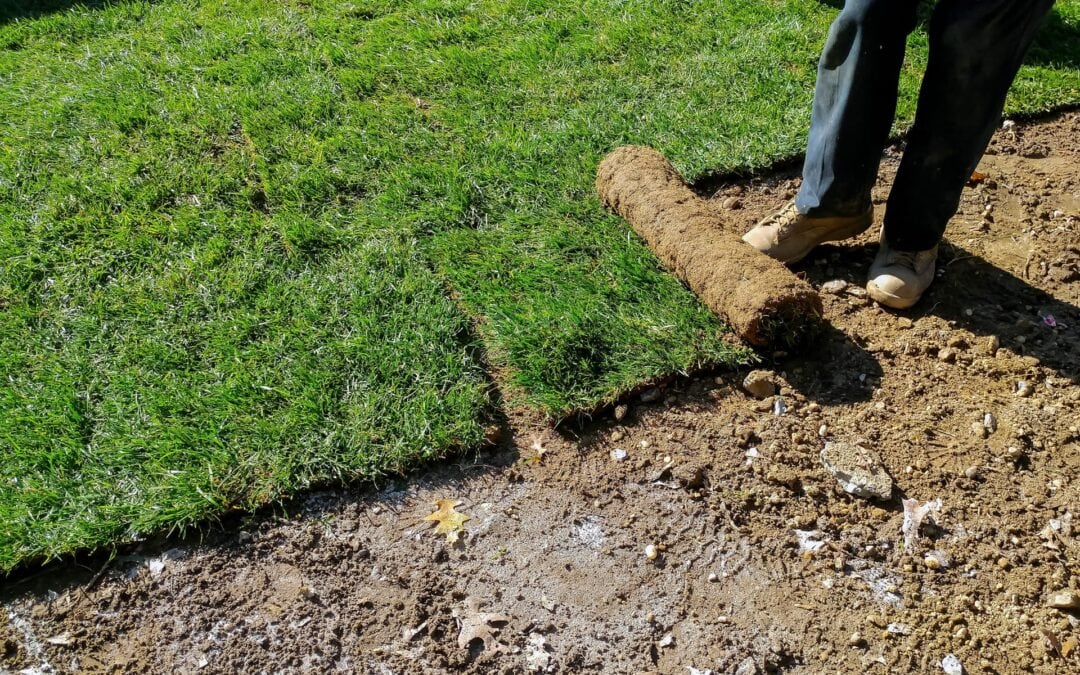
Sod provides one of the fastest ways to turn prepared soil into continuous grass cover. Penn State Extension calls sodding the quickest way to achieve a mature lawn, though the roots still need time to attach firmly to the soil underneath. Fresh sod should not be treated like an established yard on installation day because heavy traffic can create depressions and interfere with rooting. A homeowner gains the finished appearance quickly, but normal use should wait until the turf has anchored.
- Grass coverage appears immediately after installation.
- Root development continues beneath the sod.
- Foot traffic should remain limited during establishment.
- Gaps between pieces should be fitted tightly to prevent drying.
Stronger Erosion Protection
Sod can be especially useful where rainwater may move exposed soil before grass seed has time to grow. The University of Missouri Extension explains that seeded ground remains exposed to erosion during germination, while sodding can nearly eliminate that establishment problem and may be useful on hills or banks. Established turf and its roots help hold soil particles in place as water moves across the surface. Sod installed on slopes may still need staking until rooting prevents the pieces from shifting.
- Sod covers vulnerable soil without waiting for germination.
- Sloped ground can benefit from immediate turf coverage.
- Staking can hold pieces in place while roots develop.
- Dense vegetation can slow runoff and soil movement.
- Proper grading still matters for drainage control.
New Lawn Watering Needs
Sod should not be chosen on the assumption that it always needs less water than seed during establishment. Missouri Extension reports that a seeded lawn may need several light waterings per day under dry conditions, while newly laid sod may require irrigation once or twice daily until roots begin growing into the soil. The EPA also notes that landscape water needs vary with climate, weather, soil, and plant type, so watering schedules should match actual landscape needs. Irrigation frequency can be reduced once roots become established and the turf can handle deeper watering.
- Seedbeds must remain moist during germination.
- Fresh sod needs water immediately after placement.
- Weather can change irrigation frequency from day to day.
- Pooling water can encourage disease and runoff.
Better Early Weed Competition
Sod arrives as a dense turf layer, giving weeds less open soil in which to establish during the first stage of lawn development. The University of Missouri Extension notes that sod competes with viable weed seed already present in the soil, while seeded lawns commonly require more weed management during their establishment period. Poor soil preparation can still create problems because weeds may emerge through seams or thin areas. Removing existing weeds and preparing the bed before installation helps the turf begin with fewer competitors.
- Dense sod leaves less exposed soil for weeds.
- Seeded lawns may remain open while grass fills in.
- Existing weeds should be addressed before installation.
- Tight seams can reduce spaces where weeds emerge.
- Healthy turf remains the strongest long-term weed defense.
Flexible Installation Timing
Sod generally offers a wider installation window than seed, but weather and grass species still set limits. Penn State Extension says sodding can occur during much of the year when soil is not frozen, with spring, late summer, and fall providing favorable periods for cool-season turf. The University of Minnesota Extension lawn calendar also shows that recommended timing differs between sodding and seeding. Regional growing seasons should guide installation rather than a single nationwide calendar.
- Sod can offer a broader planting window than seed.
- Frozen soil prevents proper installation.
- Extreme heat can increase watering demands.
- Grass species affects suitable planting dates.

Finished Lawn Appearance
Sod gives a property continuous green coverage without waiting for seedlings to fill bare soil. That appearance can be useful when landscaping follows construction, grading, an outdoor project, or preparation for an upcoming gathering. The EPA explains that landscape design should reflect how homeowners intend to use their outdoor space, whether that means recreation, pets, visual appeal, or other goals. Sod provides speed, but matching the turf species to sunlight, soil, drainage, and intended use matters more than appearance alone.
- Sod creates uniform coverage after installation.
- Finished turf can complement other landscape improvements.
- Grass species should match available sunlight.
- Drainage conditions can affect long-term appearance.
Traffic and Lawn Durability
Sodded turf may look ready for activity immediately, but newly installed grass has limited wear tolerance until its roots grow into the underlying soil. Penn State Extension warns that traffic should be restricted during the establishment stage because young turf can be damaged before rooting is complete. Long-term durability depends more on grass species, soil conditions, mowing, irrigation, and use than on whether the lawn began as sod or seed. Families with children or pets should choose a turf type suited to the amount of traffic expected after establishment.
- Keep regular traffic off sod until roots take hold.
- Choose turfgrass according to expected lawn use.
- Compacted soil can weaken future performance.
- Mowing practices influence turf density over time.
- Damaged areas should be repaired before they expand.
Soil Preparation Before Sod
Sod cannot hide poor soil preparation for long, even though the surface may look finished immediately after installation. The University of Georgia Extension recommends testing soil, removing rocks and weeds, correcting fertility when needed, leveling the surface, and creating close sod-to-soil contact. A practical installation often reveals low spots, compacted sections, or construction debris that should be corrected before the first roll is placed. Proper preparation gives roots a better environment in which to move from the sod layer into the ground below.
- Test soil before making fertilizer or lime decisions.
- Remove debris that interferes with rooting.
- Correct low areas before laying turf.
- Press sod firmly against prepared soil.
Sod and Seed Costs
Seed generally wins when the decision is based only on initial material expense. Missouri Extension states that seed costs less initially than sod, although failed germination, erosion, weed problems, or reseeding can add expense to a difficult site. Sod carries higher material and labor costs because mature turf must be grown, harvested, transported, and installed before it deteriorates. Homeowners should compare the full establishment process rather than judging cost by the price of grass alone.
- Seed usually has the lower starting cost.
- Sod reduces the waiting period for turf coverage.
- Reseeding can add labor and material expenses.
- Site preparation is necessary for either method.
- Installation labor can increase sod project costs.
Smarter Irrigation After Establishment
Water use after establishment depends on turf species, climate, soil, rainfall, and irrigation practices rather than whether the lawn originally came from sod or seed. The EPA estimates that outdoor residential water use totals nearly 8 billion gallons per day in the United States, with substantial waste linked to overwatering and irrigation problems. Weather-based and soil-moisture controllers can prevent watering when conditions do not require it. A landscaper can also group areas with similar water needs and correct sprinkler coverage that sends water onto pavement. Proper maintenance ensures the sod roots establish well and your lawn stays green and healthy.
- Adjust irrigation schedules as weather changes.
- Prevent sprinklers from watering sidewalks and driveways.
- Check irrigation equipment for leaks or clogged heads.
- Use soil moisture rather than habit to guide watering.
Choosing Sod or Seed
Sod makes the strongest case when a homeowner needs rapid ground coverage, erosion protection, a finished appearance, or turf establishment during a period when seeding carries more risk. Seed can make more sense when budget, grass variety, and patience matter more than immediate coverage. Neither approach removes the need for soil preparation, irrigation, mowing, and thoughtful species selection, and both can fail when those basics are ignored. The better choice comes from matching the installation method to the property instead of assuming one method wins every comparison.
- Choose sod when establishment speed carries extra value.
- Consider seed when lower startup cost is the priority.
- Factor slopes and runoff into the decision.
- Match turf species to sun, soil, and lawn use.
- Plan establishment care before installation begins.

Sod vs Seed Key Takeaways
Sod vs. seed decisions become clearer once homeowners separate immediate appearance from long-term lawn performance. Sod provides mature turf coverage quickly and offers advantages on erosion-prone sites, while seed costs less at the start and provides access to a broader range of grass varieties in many markets. Your landscaper will guide you through choosing the best sod type to ensure a lush, healthy lawn. Watering needs are substantial for both methods during establishment, so sod should not be treated as a shortcut around irrigation. Soil preparation, species selection, rooting, and follow-up care ultimately determine whether either lawn develops successfully.
- Sod provides the fastest route to continuous turf cover.
- Seed normally costs less at installation.
- Sod can reduce erosion exposure on slopes.
- Both methods require careful establishment watering.
- Site conditions should drive the final choice.
FAQs on Sod Installation
How Soon Can Sod Be Walked On?
New sod should remain free from routine foot traffic until roots have attached firmly to the soil underneath. Missouri Extension reports that sod planted into a prepared bed can begin rooting within one to two weeks, though weather and turf conditions can change that timeline. Homeowners can gently lift a corner to check for resistance before allowing normal use.
Can Sod Be Installed Year Round?
Sod can be installed during a wider range of seasons than seed in many climates, but it cannot simply be laid under every weather condition. Penn State Extension advises against installation when soil is frozen and identifies spring, late summer, and fall as favorable periods for cool-season turf. Regional temperatures and the selected grass species should determine the schedule.
Does Sod Need Daily Watering?
Fresh sod commonly needs frequent irrigation until roots extend into the prepared soil. Missouri Extension says newly sodded lawns may need watering once or twice a day during establishment, with frequency adjusted for temperature, wind, rainfall, and soil moisture. Watering should gradually become deeper and less frequent as the lawn develops roots.
Does Sod Prevent Weeds?
Sod does not guarantee a weed-free lawn, but its dense coverage can compete with weed seeds already present in the soil. Missouri Extension notes that sodded turf has an establishment advantage over seeded areas where exposed soil remains available for weeds. Soil preparation and continued lawn care are still needed to keep unwanted plants from becoming established.
Is Sod Better Than Seed?
Sod is better for some projects, while seed fits others. Homeowners who need immediate turf, stronger erosion control, or a broader installation window may favor sod, while those prioritizing lower material cost and greater variety may prefer seed. Evaluating soil, slope, sunlight, irrigation access, budget, and intended lawn use provides a more useful answer than comparing appearance alone.